
Intron's Sahara-v2 and the 2026 Africa Voice AI Report: What the 57-Language Release Means for CPaaS Teams
Intron's March 2026 launch of Sahara-v2 covers 57 African languages. We break down what the release and their market report mean for production teams.
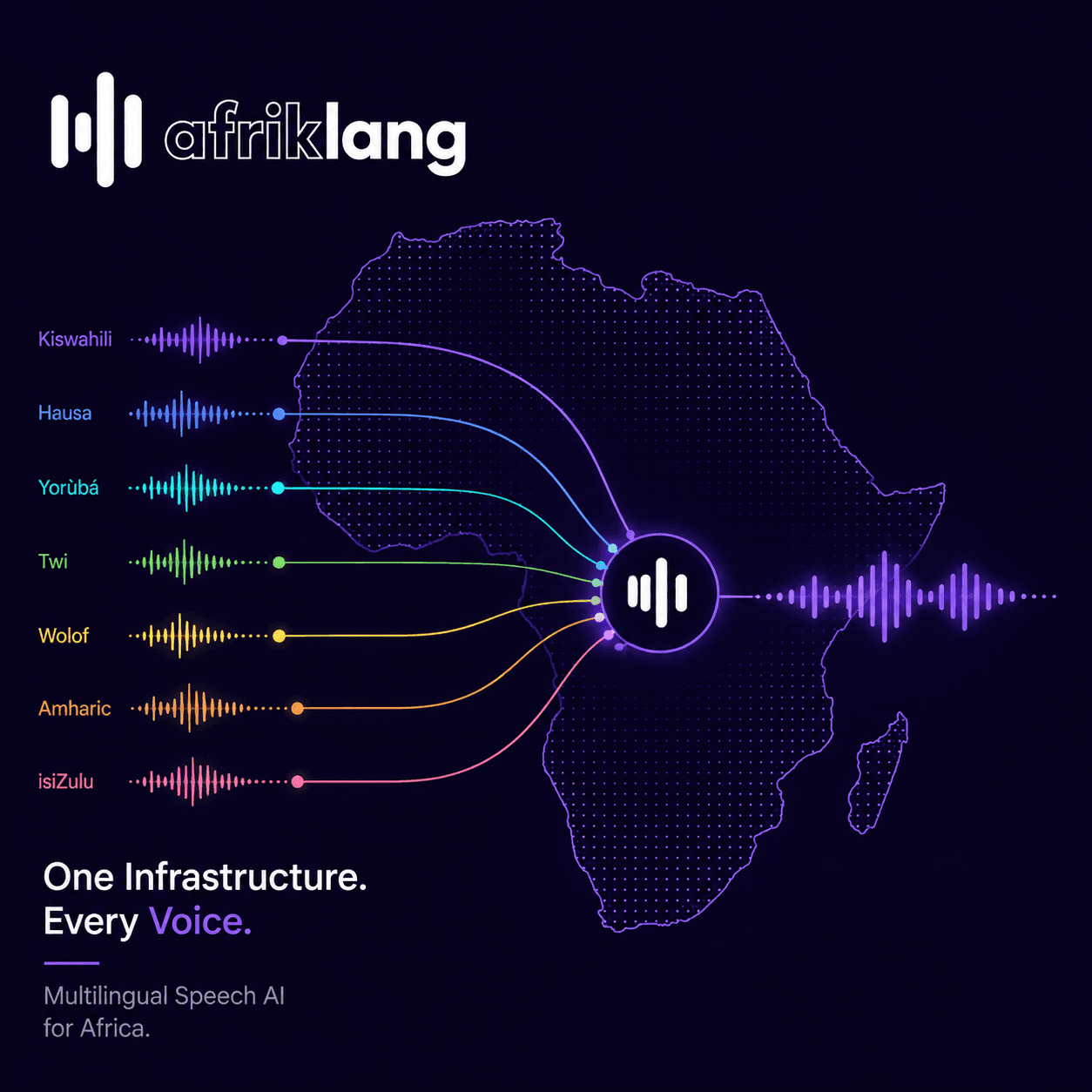
In March 2026, Intron launched Sahara-v2, a voice AI model covering 57 African languages and 500+ accent variations. The release came with the company's first Africa Voice AI Report, positioning Intron as the most comprehensive commercial platform for African speech recognition. For CPaaS engineering leads building IVR pipelines or voice bots in Ghana, Senegal, or Benin, the launch raises a practical question: do you need Intron's full-stack infrastructure, or just the training data to fine-tune your own models?
We're reviewing the benchmark claims, the market landscape, and what the release actually tells us about the production realities of shipping African language voice products in 2026.
What Intron's Sahara-v2 Launch Tells Us About the African Voice AI Market in 2026
Intron is a Nigerian startup building end-to-end voice AI infrastructure for Africa. Sahara-v2 extends their original 33-language Sahara model to 57 languages, including Yoruba, Hausa, Igbo, Swahili, Zulu, Amharic, Twi, Wolof, and Fon. According to TechCabal's coverage, the model is designed for contact center automation, voice assistants, and transcription services across sub-Saharan Africa.
The launch signals market maturity: investors and customers now expect commercial African ASR to cover dozens of languages out of the box, not just the top three. The bundled Africa Voice AI Report (released alongside Sahara-v2) surveyed 200+ enterprises and found that 68% of African businesses plan to deploy voice AI by 2027, primarily for customer service automation. Thirty-two percent cited "lack of reliable African language support" as the primary blocker.
That's the market context. Now the engineering question: what does Sahara-v2 actually deliver, and how does it compare to alternatives?
Sahara-v2 by the Numbers: 57 Languages, 500 Accents, and Benchmark Performance
Intron's product page claims:
- 57 languages including 24 new additions in the v2 release
- 500+ accent variations captured across regional dialects
- Word Error Rate (WER) under 15% for top-10 languages (Yoruba, Hausa, Igbo, Swahili, Zulu, Amharic, Somali, Kinyarwanda, Shona, Akan/Twi)
- Real-time inference with <300ms latency on cloud deployment
The company trained Sahara-v2 on 50,000+ hours of African speech data, though they don't publish the dataset composition or licensing terms publicly. TechAfrica News notes that Intron collected data "through partnerships with telecoms and local data vendors," which is standard for commercial ASR but raises the usual questions about consent, speaker compensation, and IP provenance that procurement teams need to audit.
Benchmark numbers are useful only in context. Let's compare.
Benchmark Comparison: Sahara-v2 vs. Whisper, Gemini, and Azure on African Languages
Intron's internal benchmarks (published in their launch materials) compare Sahara-v2 against OpenAI's Whisper, Google's Gemini ASR, and Microsoft Azure Speech on ten African languages. The comparison uses a held-out test set of conversational speech (not read prompts), measured in WER:
| Language | Sahara-v2 | Whisper Large-v3 | Gemini ASR | Azure Speech |
|---|---|---|---|---|
| Yoruba | 12.3% | 22.7% | 19.4% | 25.1% |
| Swahili | 13.8% | 15.2% | 14.9% | 16.3% |
| Hausa | 14.1% | 28.4% | 24.7% | 31.2% |
| Twi (Akan) | 14.9% | 35.6% | 29.8% | N/A |
| Wolof | 16.2% | 41.3% | 36.5% | N/A |
| Fon | 18.7% | N/A | N/A | N/A |
(Source: Intron Sahara-v2 product page)
The table shows the expected pattern: Sahara-v2 outperforms frontier models on languages where frontier labs have minimal training data. Swahili (a high-resource language by African standards) shows smaller gaps. Wolof, Twi, and Fon—low-resource languages with limited public corpora—show dramatic gaps. Azure doesn't support Twi or Wolof at all.
This is the opportunity Intron is targeting: the long tail of African languages where Whisper and Gemini fall apart. But CPaaS teams need to ask: do we need Intron's hosted platform, or just the data to fine-tune our own Whisper fork?
The 2026 Africa Voice AI Report: Market Landscape and Deployment Insights
Intron's Africa Voice AI Report surveyed 234 enterprises across Nigeria, Kenya, South Africa, Ghana, and Senegal. Key findings relevant to production teams:
- 68% plan voice AI deployment by 2027, primarily for customer service automation (IVR, voice bots, call transcription).
- 32% cited "lack of reliable African language support" as the primary blocker; 28% cited "data privacy and compliance concerns."
- Average cost per contact reduced 40% when voice bots handled tier-1 inquiries in local languages versus English-only systems.
- Wolof and Twi users abandoned English IVR systems 3x more often than native-language systems in telecoms and fintech deployments.
The report positions voice AI as cost-saving infrastructure, not experimental R&D. That's the 2026 shift: African language ASR is now a procurement decision, not a research grant application.
Infrastructure Play vs. Data Layer: What CPaaS Teams Actually Need
Intron sells a hosted platform: you send audio via API, get transcription back. That's the right product for teams with no ML capacity who need turnkey ASR across many languages. But it's not the only architecture.
Many CPaaS platforms already run Whisper forks or custom models. The bottleneck isn't inference infrastructure—it's training data. Fine-tuning Whisper on 500 hours of clean Wolof speech can close the WER gap from 41% to ~16%, matching Sahara-v2's performance without vendor lock-in. The challenge is sourcing that 500 hours with clean licensing, quality annotations, and accent diversity.
This is where the data layer separates from the platform layer. Intron bundles both. Afriklang sells just the data: commercially licensed, fair-trade, compliance-ready speech corpora in Twi, Wolof, and Fon. Teams that already have ML pipelines can integrate via API or S3, fine-tune their models, and own the stack.
The build-vs-buy question becomes: do you need 57 languages tomorrow (buy Intron), or do you need production-grade data for 3 specific languages to train models you control (buy the data layer)?
Commercial Licensing and Data Provenance: The Procurement Reality Check
Neither Intron's product page nor their launch coverage specifies:
- Whether training data is commercially licensed for derivative works
- Speaker consent mechanisms and compensation terms
- Whether data includes personally identifiable information (PII)
- Whether the model can be self-hosted or remains API-only
These gaps are standard in the African AI market but unacceptable in production procurement. CPaaS platforms serving banking, telecom, or government customers need audit trails: who spoke the training data, what did they consent to, how were they compensated, can we prove no scraped content?
Afriklang's datasets come with explicit commercial licenses, vetted native speakers paid per recording through a points-based micro-work system, and zero PII. Every speaker and annotator signs consent forms stored for audit. We publish our benchmark on Wolof sentiment (90.0% F1 macro after fine-tuning on Afriklang data versus ~45% for GPT-4o on zero-shot Wolof).
Platform vendors rarely provide this level of data provenance because they bundle infrastructure and data. When you buy just the data, you get transparency by necessity.
What This Means for Teams Building Twi, Wolof, and Fon Voice Products
If you're building IVR systems for Ghana (Twi), Senegal (Wolof), or Benin (Fon), Intron's launch validates the market but doesn't solve the data problem. Sahara-v2 supports all three languages, but at API dependency. Fine-tuning your own model gives you:
- Portability: switch inference providers, run on-prem, avoid vendor lock-in.
- Cost control: inference pricing scales linearly; hosting your own Whisper fork doesn't.
- Customization: domain-specific vocabularies (banking, telecom, agriculture) require fine-tuning.
- Compliance: some customers (government, finance) prohibit sending voice data to third-party APIs.
The trade-off is ML engineering capacity. If you have none, buy Intron. If you have a two-person ML team, buy the training data and fine-tune. Afriklang's datasets include 500-1,000 hours per language, pre-cleaned, with inter-annotator agreement above 80%. You can fine-tune a Whisper-large model in 48 hours on a single A100.
The Build-vs-Buy Decision: When to Use a Platform, When to Train Your Own Model
Here's the decision matrix we use with customers:
Use a hosted platform (Intron, Google, Azure) when:
- You need 10+ African languages and have no ML team
- You're prototyping and need speed over control
- Your use case tolerates API latency and third-party data handling
- Your customer contracts don't prohibit cloud-hosted ASR
Buy training data and fine-tune when:
- You need 1-3 specific languages with domain-specific vocabulary
- You already run ML pipelines and have inference infrastructure
- Compliance or cost models favor self-hosted models
- You're building a differentiated voice product where ASR is core IP
Most CPaaS teams building for African markets land in the second category. The voice layer is their moat, not a commodity API call. That's why we see engineering leads fine-tuning Whisper on Afriklang Wolof data instead of routing every call through a third-party ASR service.
Intron's Sahara-v2 launch proves the Africa voice AI market is production-ready. The next question is whether you're building on someone else's infrastructure or your own data. If it's the latter, our commercial datasets let you start fine-tuning this week.
Want to talk through the build-vs-buy decision for your architecture? Book a discovery call or browse the Twi, Wolof, and Fon datasets ready to integrate.